Running a profitable hotel has never been more complex. Every missed call, slow check-in and manual task eats into margins and revenue — meanwhile, labor costs rise and guest expectations climb. In fact, 76% of hotels have faced staffing difficulties, with the vast majority forced to increase wages just to attract talent, according to recent industry survey data from the American Hotel & Lodging Association (AHLA).
That’s why hotel operational efficiency matters more than ever. Smarter operations cut costs, free up staff time, improve the guest experience and increase your revenue. In this guide, we’ll break down practical operational strategies that help you save and make money.
Key Takeaways
Operational efficiency drives both cost savings and revenue growth: The right technology eliminates repetitive tasks, helps you upsell and improves guest satisfaction.
AI and automation are core parts of modern hotel operations: Hotels are rapidly investing in AI-powered workflows to improve communications, reduce workload and increase efficiency.
Hospitality-specific platforms like Canary give hotels a competitive edge: Unified guest engagement systems connect operations, guest communications and revenue opportunities into one experience.
What is Hotel Operational Efficiency?
Hotel operational efficiency is optimizing resources (e.g. staff time, energy usage and supplies) while streamlining workflows to reduce waste, lower costs and improve overall hotel performance. Efficient hotels use smarter processes and technology to simplify operations across departments.
Operational efficiency in the hotel industry means streamlining tasks across the front desk, housekeeping and guest services. Using smart tools releases staff from repetitive responsibilities so they can better deliver exceptional service that boosts loyalty, upsells and overall guest satisfaction. When your hotel is operationally efficient, it looks like:
Faster guest service
Reduced labor strain
Better staff productivity
Increased ancillary revenue
Higher guest satisfaction scores
The Core Functions of Hotel Operations Management
Before improving operational efficiency, it’s important to understand the core departments that keep a hotel running day to day. Hotel operations typically center around four key functions:
Front Office
Housekeeping
Food & Beverage
Sales & Marketing
Each department plays a direct role in shaping both operational performance and the guest experience.
When these teams operate efficiently and stay connected, hotels reduce friction, improve service and unlock stronger revenue opportunities. For the specific roles and responsibilities of each department, read our comprehensive guide on Hotel Operations and Management.
How Streamlined Operations Make You More Money
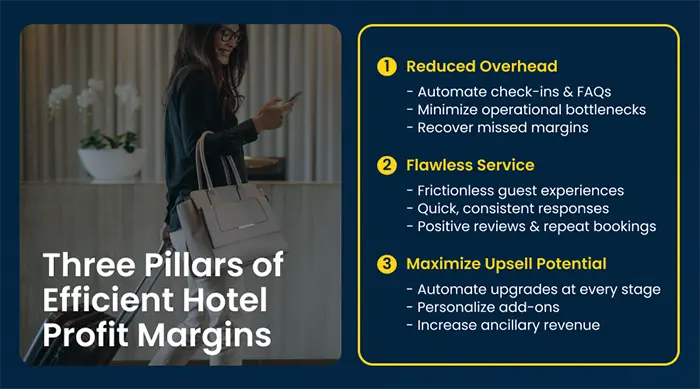
Hotel operational efficiency is like the trunk of a tree that feeds the branches of guest satisfaction. When operations are smoother, staff get more time to deliver personalized guest experiences. Faster service, better communication and fewer operational bottlenecks all contribute to stronger reviews, repeat bookings and higher guest loyalty.
Efficient operations also improve profitability. By reducing time spent on manual tasks, you also create more opportunities for upsells (and therefore revenue) without adding strain. Improving hotel operational efficiency creates:
Higher guest satisfaction and loyalty
Increased upsell and ancillary revenue
Lower operational costs and labor strain
Faster, more consistent guest service
Automate Hotel Operations: Reduced Labor Costs = Higher Profit Margins
Mundane tasks like answering common guest questions, managing check-ins, sending guest communications and processing routine requests can all be improved through automation. This reduces labor strain while improving consistency across the property.
Faster, Smoother Service = Better Reviews & More Repeat Business
Efficient hotel operations create a seamless guest experience from discovery through checkout. It’s easier to build guest satisfaction when guests receive quick responses, easy check-ins and personalized service without delays or friction.
That smoother experience has a direct impact on loyalty and revenue. Happy guests are more likely to leave positive reviews, return for future stays and recommend your property to others, all of which strengthen long-term profitability.
More Staff Time for High-Value Tasks = Increased Upsell Revenue
Juggling routine requests and manual processes is a time drain. Instead, empower your teams to spend more time delivering personalized guest service, recommending upgrades and creating memorable guest experiences.
Automation also creates new opportunities to surface upsells throughout the guest journey, from room upgrades to late checkout and on-property add-ons. This brings in more revenue without increasing workload.
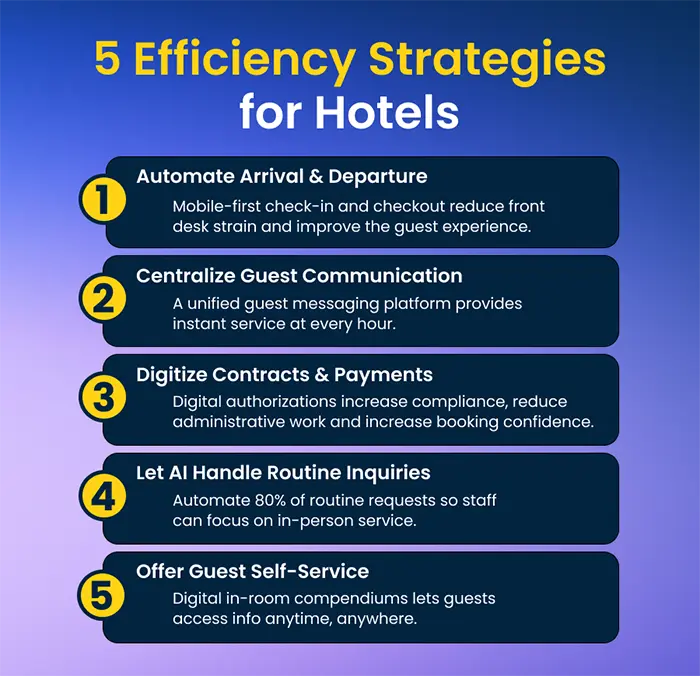
5 Strategies to Improve Operational Efficiency in the Hospitality Industry
Hotels wanting to improve hotel operations often focus on cutting costs. But the biggest gains come from improving workflows, reducing friction and giving staff more time to focus on guests. Strong hotel operations and management strategies create smoother experiences for both staff and travelers, in addition to creating new revenue opportunities.
1. Automate the Arrival & Departure Workflow
Manual check-ins and checkouts are some of the biggest operational bottlenecks in hospitality. Front desk teams spend valuable time handling paperwork, processing payments and answering repetitive arrival questions — all while guests wait in line after a long day of travel.
Automating the arrival and departure experience is one of the fastest ways to improve hotel operations. Tools like Canary’s Mobile Check-In and Smart Checkout streamline the entire workflow and eliminate lobby congestion. Hotels that automate check-in and checkout benefit from:
Faster guest arrivals and departures
Reduced front desk labor strain
Shorter wait times and fewer lines
Smoother guest experiences from the first interaction
2. Unify Your Guest Communication Channels
Fragmented guest communication creates operational chaos. When staff rely on phone calls, paper notes and disconnected systems to manage requests, messages get missed, response times slow and the guest experience suffers.
Centralized guest messaging solves this by bringing communication into one organized platform. Staff can manage guest conversations across channels while automating routine interactions and improving response times. Hotels that unify guest communication see:
Faster guest response times
Fewer missed requests
Reduced staff interruptions
More consistent guest service
3. Digitize Your Contracting and Payment Authorizations
Manual sales and payment workflows slow down operations and create unnecessary security risks. Printing, scanning, emailing and storing paper authorization forms wastes staff time while increasing the risk of fraud and processing errors.
Digital Contracts and Digital Authorizations modernize these workflows by automating approvals, signatures and payment verification in one secure system. This reduces administrative work while boosting both efficiency and compliance. Hotels that digitize contracting and payment workflows experience:
Tempi di elaborazione dei contratti più rapidi
Sicurezza dei pagamenti migliorata
Lavoro amministrativo manuale ridotto
Operazioni di vendita più efficienti.
4. Implementare l'IA per gestire le richieste di routine
I team degli hotel dedicano una quantità sorprendente di tempo a rispondere ogni giorno alle stesse domande: “A che ora è il check-in? Offrite parcheggio? La piscina è aperta? Posso richiedere un check-out posticipato?” Queste interazioni ripetitive creano continue interruzioni per il personale e rallentano il servizio in tutta la struttura.
Messaggistica AI per gli ospiti agisce come un addetto alla reception digitale, rispondendo istantaneamente alle domande comuni degli ospiti 24 ore su 24, 7 giorni su 7 e inoltrando i problemi più complessi al personale. Ciò migliora la velocità di risposta liberando i team degli hotel per concentrarsi su interazioni con gli ospiti di maggior valore. Con la comunicazione basata sull'IA, gli hotel riscontrano:
Carico di lavoro del personale ridotto
Tempi di risposta istantanei per gli ospiti
Efficienza operativa migliorata
Servizio ospiti più personalizzato
5. Offrire agli ospiti opzioni self-service
I viaggiatori preferiscono sempre più le opzioni self-service per un accesso più rapido e comodo ai servizi. Dietro il banco, gli strumenti self-service riducono lo stress operativo minimizzando le richieste ripetitive degli ospiti. Questo si traduce in un vantaggio sia per gli ospiti che per il personale dell'hotel.
Soluzioni come Chioschi Self-Service e Compendi Digitali consentono agli ospiti di effettuare il check-in, accedere alle informazioni dell'hotel, esplorare i servizi e fare richieste in autonomia, senza attendere l'assistenza del personale. Gli hotel che investono in strumenti self-service beneficiano di:
Servizio ospiti più rapido
Minore affollamento alla reception
Meno richieste ripetitive da parte degli ospiti
Maggiore comodità e soddisfazione degli ospiti
L'efficienza significa risparmiare (e guadagnare) denaro
Gli hotel di maggior successo considerano l'efficienza operativa una strategia di crescita. Operazioni alberghiere più fluide si traducono in una maggiore efficienza del personale e un migliore servizio agli ospiti. Inoltre, le opportunità di guadagno diventano più facili da cogliere in ogni fase del percorso dell'ospite.
Dall'automazione dei flussi di lavoro del check-in alla semplificazione della comunicazione con gli ospiti e all'implementazione di strumenti di servizio basati sull'IA, le operazioni alberghiere efficienti creano un impatto aziendale misurabile. Gli hotel riducono lo sforzo lavorativo e l'attrito operativo, migliorando al contempo la soddisfazione degli ospiti, aumentando i ricavi da upsell e promuovendo una maggiore fedeltà a lungo termine.
Operational Strategy
How it SAVES Money (Cost Reduction)
How it MAKES Money (Revenue Growth)
Automated Workflows
Reduces labor costs by requiring fewer staff hours for administrative tasks like data entry and filing.
Increases Revenue Per Available Room by allowing for faster turnover, meaning guests can get into their rooms quickly.
Unified Communication
Prevents costly service recovery (e.g., comping a meal or a night's stay) caused by missed requests or errors.
Enables staff to send targeted, real-time offers (like late checkout or spa deals) directly to the guest's phone.
Digital Payments
Minimizes financial loss from manual errors, "friendly fraud," and chargebacks through secure, verified links.
Speeds up the sales cycle for group bookings and events, allowing the sales team to close more deals in less time.
AI Inquiries
Lowers overhead by handling high-volume, low-value interactions without increasing headcount.
Improves conversion rates by providing instant answers to booking-related questions on your website 24/7.
Self-Service Options
Decreases the amount of time and space needed to manage simple guest needs and information sharing.
Increases ancillary revenue by making it incredibly easy for guests to browse and book amenities, room service or tours.
Pronto a costruire un hotel più efficiente e redditizio? Scopri come la piattaforma di Canary semplifica le operazioni per aumentare i ricavi.
Domande frequenti
Perché l'efficienza operativa è importante per gli hotel?
L'efficienza operativa è importante perché influisce direttamente sia sulla redditività che sull'esperienza degli ospiti. Gli hotel efficienti riducono il tempo sprecato, ottimizzano i flussi di lavoro e abbassano i costi operativi, offrendo al contempo un servizio più rapido e personalizzato. Ciò migliora la soddisfazione degli ospiti, aumenta la produttività del personale e crea maggiori opportunità di crescita dei ricavi attraverso upsell, prenotazioni ripetute e recensioni online più solide.
Quali sono esempi di efficienza operativa alberghiera?
Esempi di efficienza operativa alberghiera includono l'automazione delle attività ripetitive, l'ottimizzazione dei flussi di lavoro, la gestione ottimizzata dell'inventario, l'implementazione di misure di risparmio energetico, il miglioramento della formazione dei dipendenti e l'adozione di tecnologie alberghiere avanzate.
Altri esempi comuni includono:
Check-in e check-out da mobile
Messaggistica per gli ospiti basata sull'IA
Chioschi self-service
Campagne di upsell automatizzate
Contratti digitali e autorizzazioni di pagamento
Piattaforme centralizzate per la comunicazione con gli ospiti
Come migliorare l'efficienza operativa negli hotel?
Gli hotel migliorano l'efficienza operativa riducendo il lavoro manuale, automatizzando i processi ripetitivi e collegando i sistemi tra i vari reparti. Le strategie più efficaci spesso includono la digitalizzazione del percorso dell'ospite, la centralizzazione della comunicazione, l'implementazione di strumenti basati sull'IA e l'offerta di opzioni self-service per gli ospiti.
Strategie efficaci di gestione e operatività alberghiera si concentrano sulla creazione di flussi di lavoro più fluidi che migliorano contemporaneamente sia la produttività del personale che la soddisfazione degli ospiti.
In che modo la tecnologia contribuisce a migliorare l'efficienza nel settore dell'ospitalità?
La tecnologia migliora l'efficienza nel settore dell'ospitalità automatizzando le attività che richiedono tempo, riducendo i colli di bottiglia operativi e fornendo al personale un accesso più rapido alle informazioni. Strumenti come il Mobile Check-In, la messaggistica per gli ospiti, l'AI Voice e lo Smart Checkout riducono il carico di lavoro manuale migliorando al contempo la velocità e la coerenza del servizio.
Le piattaforme di ospitalità connesse migliorano anche la comunicazione tra i reparti, aiutando gli hotel a operare in modo più fluido e offrendo esperienze migliori agli ospiti.
In quanto tempo gli hotel possono solitamente riscontrare un ROI dai miglioramenti operativi?
La velocità del ROI dipende spesso dalle dimensioni della struttura, dai flussi di lavoro esistenti e dalla tecnologia specifica implementata, ma i miglioramenti dell'efficienza operativa di solito generano sia risparmi a breve termine che una crescita dei ricavi a lungo termine.
Molti hotel iniziano a vedere un ROI dai miglioramenti operativi entro pochi mesi, specialmente quando implementano l'automazione e la tecnologia rivolta agli ospiti. Check-in più rapidi, riduzione dello stress lavorativo, miglioramento della conversione degli upsell e meno richieste degli ospiti non soddisfatte possono creare un impatto immediato sulle operazioni e sui ricavi.






.avif)